Masai Mara Conservancies
The Greater Masai Mara includes the un-fenced Masai Mara National Reserve as well as several community-owned conservancies. These conservancies belong to Maasai families who lease their land to safari camps and lodges. In return, the income supports community development projects such as education and infrastructure. This model benefits both wildlife and people: previously overgrazed lands are restored through rewilding, and the Maasai gain sustainable livelihoods from conservation. These conservancies also offer quieter, more exclusive safari experiences.
The Great Migration
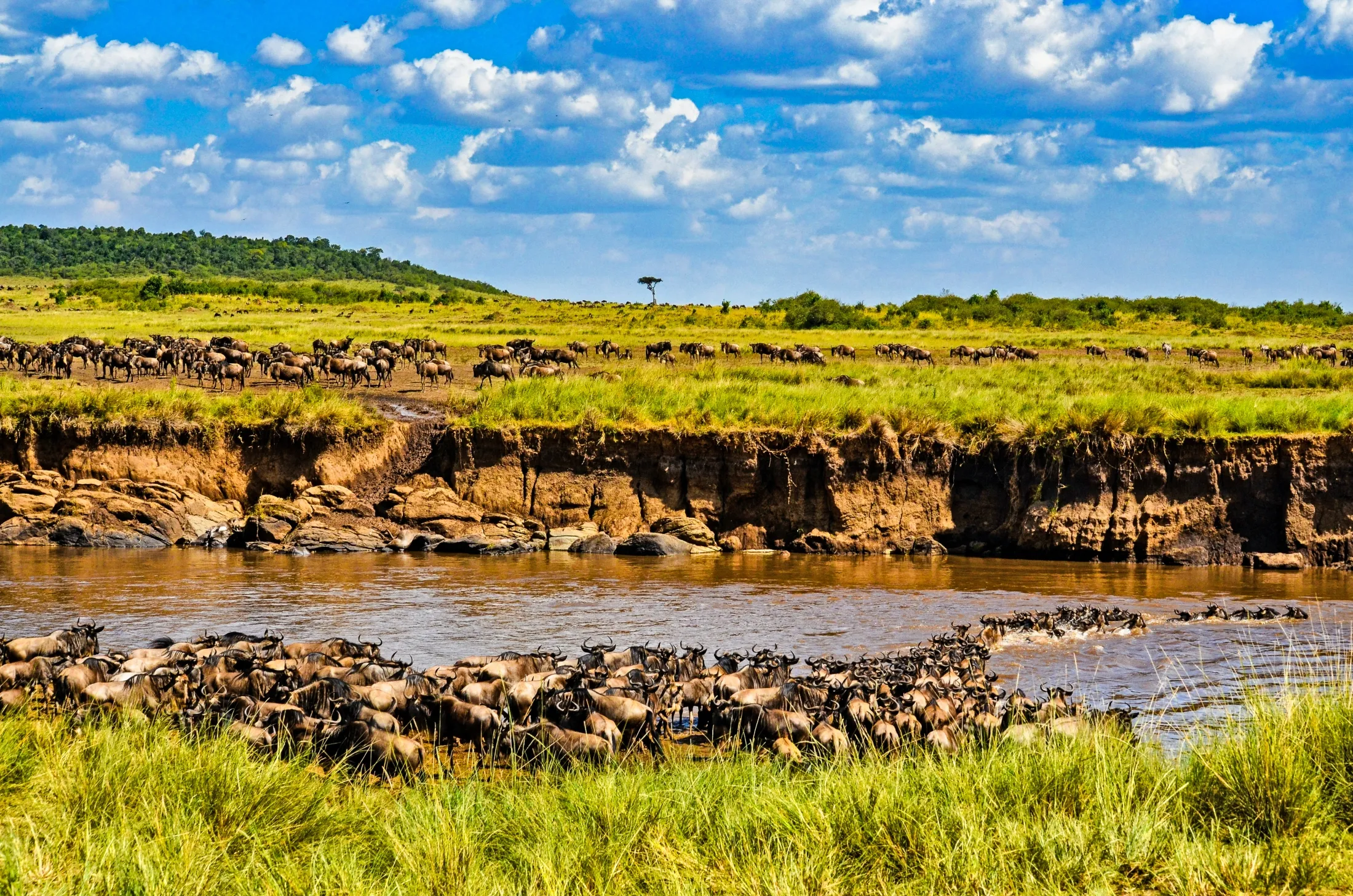
Between July and October, the Masai Mara becomes the stage for one of nature’s greatest spectacles—the Great Wildebeest Migration. More than 1.5 million wildebeest, zebras, and antelopes move north from the Serengeti in search of fresh grazing. In mid-July, the herds often brave the perilous Mara River, facing crocodiles, strong currents, and predators waiting on the banks. By September and October, the plains are carpeted with vast numbers of grazing herds, creating an unforgettable sight unique to the Serengeti–Mara ecosystem.
African Big Cats
Migration season brings the Masai Mara’s big cats to life. The abundance of prey allows lions, leopards, and cheetahs to thrive, raise healthy cubs, and hunt with exceptional success. The reserve is home to several long-established lion prides, with females remaining lifelong members while males often battle for dominance. At night, the deep roar of territorial males echoes through the plains. Early morning or late afternoon game drives offer the best opportunities to witness these predators in action.